The Hidden Cost of Disconnected Quality and Training Systems
The gap between SOP approval and employee retraining is where most FDA 483 observations originate. Learn what that gap is costing your organization and how to close it.
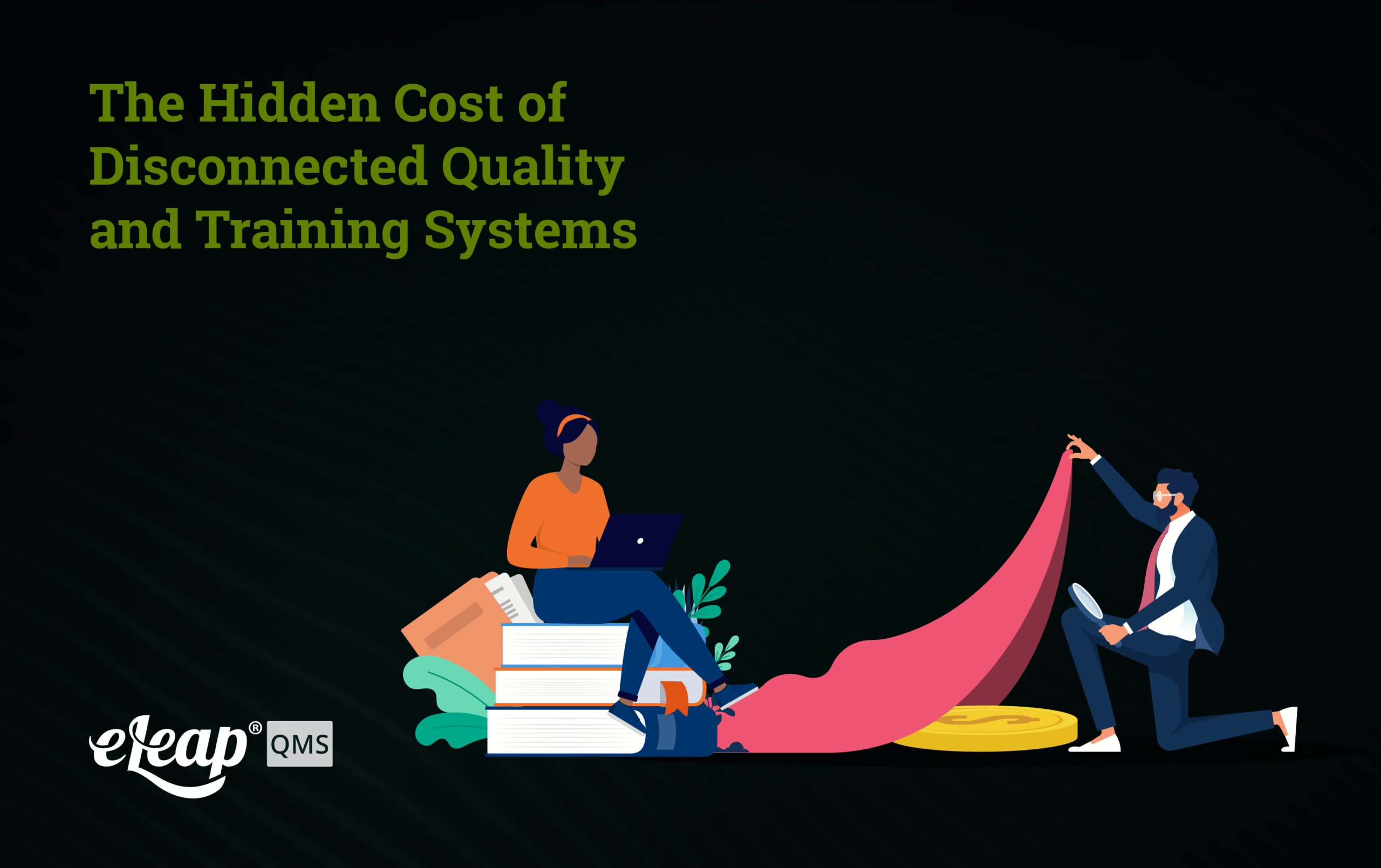
Your QMS approved the SOP. Does your LMS know?
The gap between document approval and employee retraining is where FDA 483 observations originate — and in most regulated organizations, no one sees it closing in real time.
When a procedure is revised and approved in your QMS, someone has to identify which employees are affected, update training assignments in a separate system, notify those employees, and track completions — all before an inspector asks whether the workforce was trained on the current version before performing the task. That handoff depends entirely on human coordination. And in organizations managing dozens of active document revisions at any given time, that coordination fails.
This is not a training program failure. It is a systems design problem.
What this whitepaper covers
Drawing on FDA enforcement data from FY2024 and regulatory requirements from 21 CFR 211.25, 21 CFR 820.25, and ISO 13485:2016, this whitepaper quantifies what regulated organizations lose when their QMS and LMS operate as separate systems.
The four hidden cost categories:
- Inspection and audit exposure — how version mismatches between two systems become 483 observations.
- Operational drag — the administrative burden that compounds with every SOP revision, role change, and new hire.
- The compliance lag window — the period between procedure approval and completed retraining, where employees may perform tasks on superseded versions without detection.
- Scale friction — why the manual handoff that works at 50 employees breaks down at 500.
The whitepaper also includes a 10-question self-assessment that helps quality leaders measure their organization’s current exposure in under ten minutes.